
Inside the Cartridge-01
INSIDE THE CARTRIDGE-01
-By Sanjay Soni, MD of Hughes Precision Manufacturing
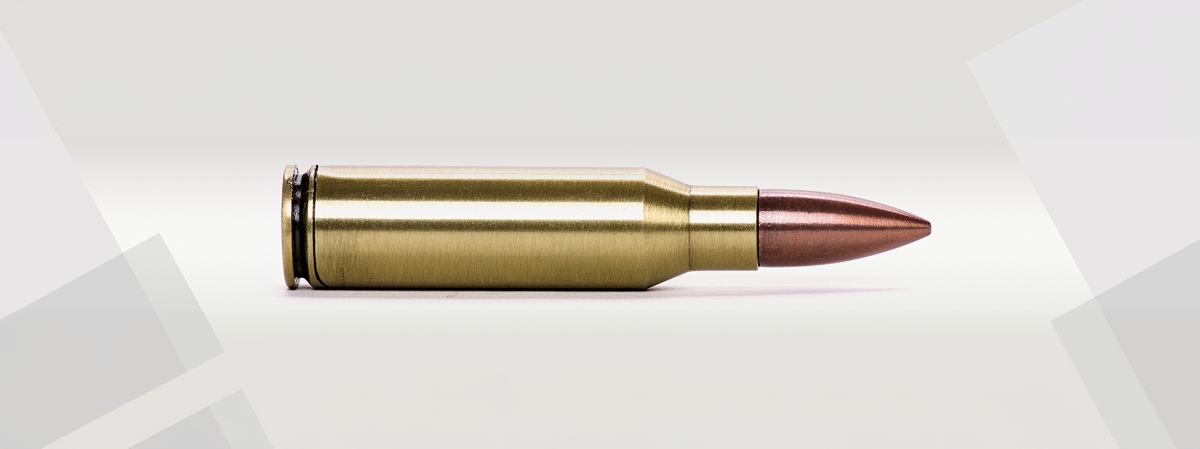
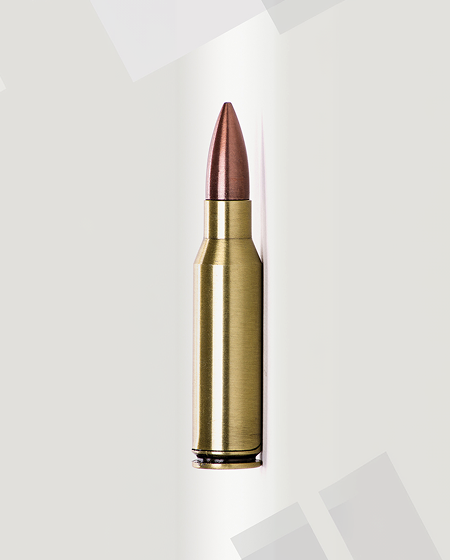
A primer on Cartridge Components
A firearm cartridge looks simple from the outside. A brass case. A seated bullet. A small circular primer at the base. But the moment the firing pin falls, that compact assembly becomes a precisely timed mechanical and chemical event.
In a fraction of a second, the primer ignites, the propellant burns, pressure builds, the case seals the chamber, and the bullet begins its flight down the barrel. Every part of the cartridge has a job. When those parts work together correctly, the result is the familiar crack of a fired round and a projectile moving forward at tremendous speed.
Let’s do a deep dive of the key components, starting with the tiny part that begins the entire sequence.
The Primer: The Spark That Starts It All
The primer is the ignition source of the cartridge. It sits at the base of the case and waits for one decisive moment: the strike of the firing pin.
When the primer is hit with sufficient force, its internal compound reacts chemically and produces a burst of heat. That heat travels through the flash hole and ignites the propellant inside the cartridge case. Without that ignition, nothing else happens. No pressure. No projectile movement. No bang. Just a misfire.
In centerfire ammunition, the two most common primer systems are Boxer and Berdan primers.
Boxer-primed cases usually have a single central flash hole and are common in ammunition intended for reloading. Berdan-primed cases typically have two smaller flash holes and are more common in military-style and surplus ammunition.
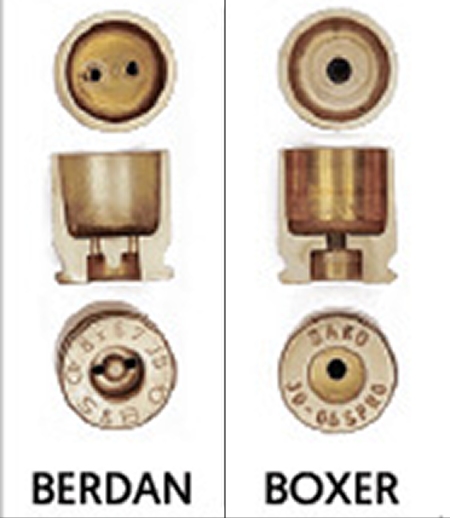
Berdan and Boxer primed cases
A simple way to identify them is to look inside a fired case. If you see one central flash hole, it is likely Boxer-primed. If you see two flash holes, it is likely Berdan-primed.
The Cartridge Case: The Round’s Structural Backbone
The cartridge case, often casually called "brass,” holds the primer, propellant, and bullet together as one complete round. It also performs a critical sealing function when the firearm is fired.
Cases are most commonly made from brass or mild steel, though aluminium cases are also used.
When the round fires, pressure rises rapidly inside the chamber. A good cartridge case expands just enough to seal the chamber and prevent gas from escaping rearward. Almost instantly afterward, it contracts enough to allow extraction.
That small expansion-and-contraction cycle is one of the reasons case material matters so much.
Brass Cartridge Cases
Brass remains the preferred case material for high-quality ammunition, especially in precision shooting. It is malleable, durable, and forgiving. When fired, brass expands quickly to form a gas-tight seal in the chamber, then relaxes enough for smooth extraction.
Brass is also softer than steel, which helps reduce wear on the firearm. For shooters who reload, good-quality brass can offer longer case life and more consistent performance.
Steel Cartridge Cases
Steel-cased ammunition is often marketed as a budget-friendly option, especially in calibers commonly associated with AK-pattern rifles and other military-style firearms.
Steel cases are harder than brass and do not expand and contract in quite the same way. Many are coated with lacquer, polymer, or another protective finish to prevent corrosion and improve feeding.
The advantage is cost. For casual practice in rugged platforms, steel-cased ammunition may make sense. For match rifles, premium barrels, or tighter firearms, brass is usually the better choice.
To be continued...
K G Marg, Connaught Place
New Delhi 110 001
Goa 403 722, India