
Shooting Accurately over Longer Distances
-By Sanjay Soni, MD of Hughes Precision Manufacturing
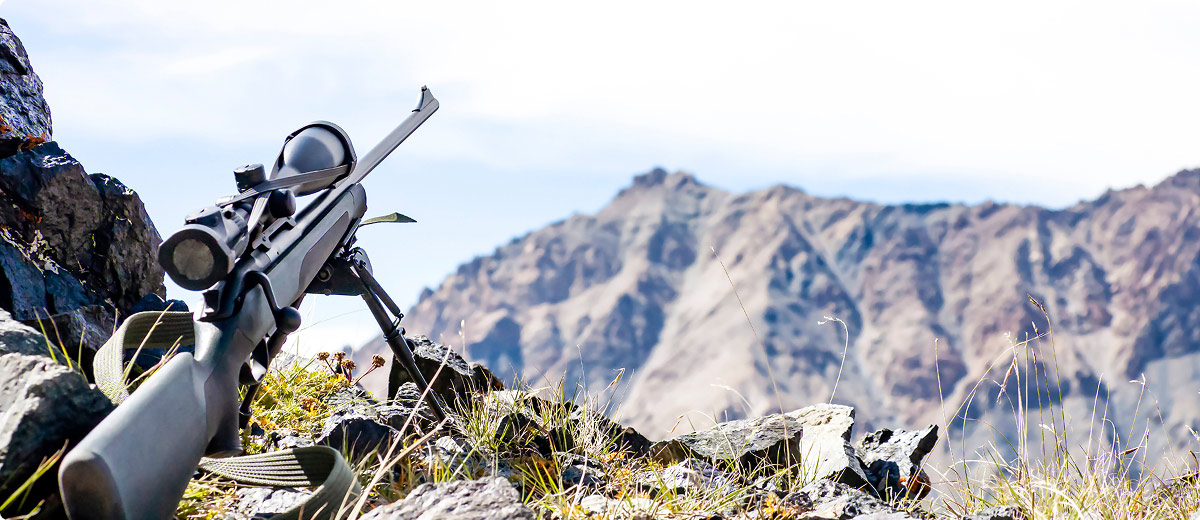
How Altitude, Temperature, and Transonic Speed Change Bullet Trajectory
At close range, a bullet does not ask much from the shooter. Line up the sights, press the trigger cleanly, and the shot usually lands close to where it was intended.
Stretch that distance to 600, 800, or 900 meters, and the story changes.
Now the bullet is no longer fighting only gravity. It is fighting the atmosphere.
When the Air Changes, the Shot Changes
The moment a bullet leaves the muzzle, it begins pushing through air. Every air molecule it strikes steals a little energy. The denser the air, the harder the fight. The bullet slows faster, stays in flight longer, and drops more before it reaches the target.
But take the same rifle and cartridge to higher ground, and the air thins out. With fewer air molecules in its path, the bullet faces less drag. It holds velocity better, reaches the target sooner, and drops less. The result can surprise even experienced shooters - the bullet may strike higher than expected.
That is why altitude matters in long-range shooting.
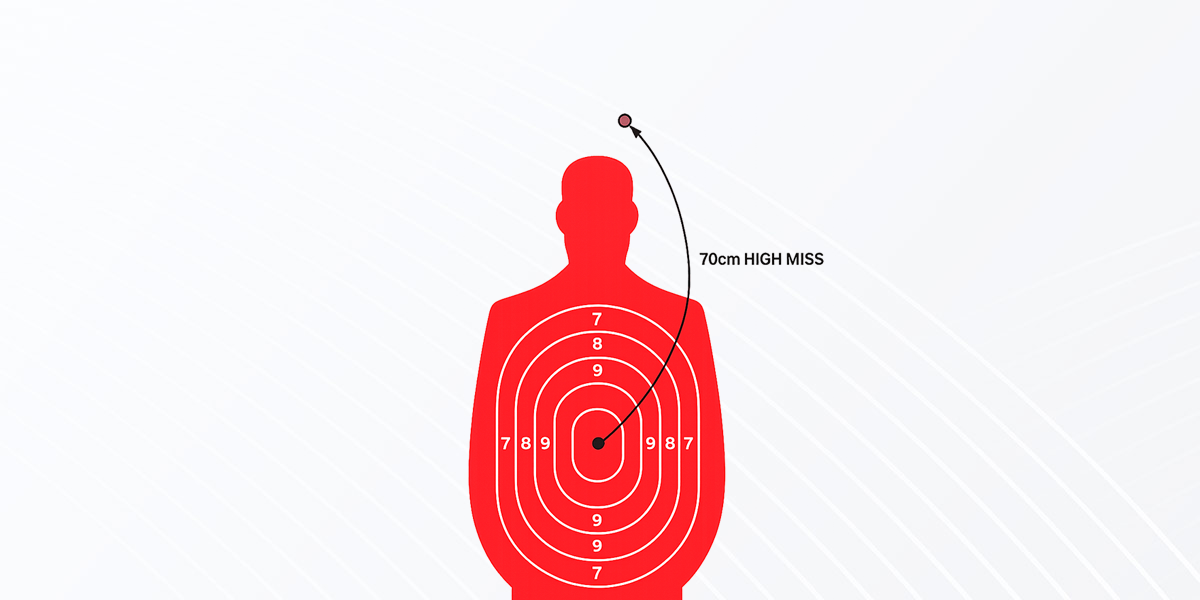
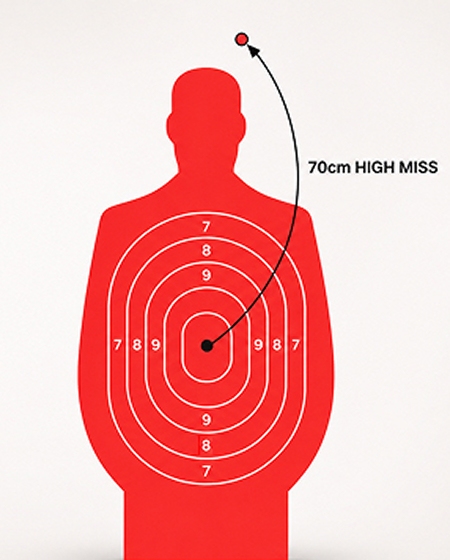
Effect of an altitude increase of 1000 meters and 5°C increase in temperature on bullet Trajectory
Temperature
Temperature adds another layer to the equation. Cold air is denser, increasing drag and bullet drop. Warm air is thinner, reducing drag and helping the bullet fly flatter. In practical terms, low altitude and low temperature make the bullet work harder. Higher altitude and warmer conditions make the air easier to cut through.
Ballistic calculations use defined reference atmospheres, although the precise temperature, pressure and humidity assumptions vary according to the applicable military, industry or ballistic standard. But no shooting range, mountain valley, desert plain, or battlefield promises to match those numbers. Real-world conditions are always changing.
The Transonic Zone
Then comes another critical moment in a bullet’s flight: the transonic zone.
This is where the bullet slows from supersonic to subsonic speed. As it passes through this unstable transition, airflow around the projectile changes dramatically. Stability can suffer, and the trajectory becomes harder to predict. For many rifle and cartridge combinations, this is where practical effective range begins to reach its limit.
How Much Does Altitude Affect Bullet Drop?

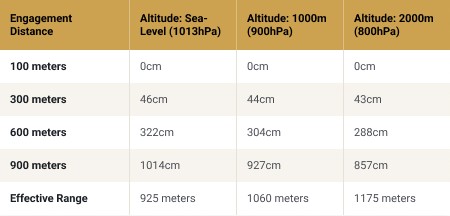
At short distances, the effect of altitude is minimal. But at 600, 800, or 900 meters, the change becomes too large to ignore.
On an 800-meter shot, moving the firing point 1,000 meters higher in altitude can cause the bullet to strike roughly 50 cm above the point of aim. Add a 5°C increase in temperature, and that shift can grow to nearly 70 cm. On a man-sized target, a center-mass hold could turn into a clean miss.
Long-range accuracy is not just about the rifle, cartridge, optic, or shooter. It is also about reading the air.
A setup that performs perfectly at one location may behave very differently when altitude, pressure, or temperature changes.
For the serious shooter, understanding the environment is not optional. It is part of the shot.
K G Marg, Connaught Place
New Delhi 110 001
Goa 403 722, India